
MahaVastu vs Traditional Vastu: Method, Principles & Khushdeep Bansal's Approach
A homeowner looking into Vastu often has one practical question: will the advice involve rebuilding rooms, or can the existing layout be considered? MahaVastu is a named contemporary system associated with Bansal, while the older Vastu tradition covers a much broader body of architectural knowledge. They share an interest in direction and spatial arrangement, but their methods should not be treated as interchangeable.
The useful comparison goes beyond “old versus new.” It concerns how a property is assessed, what recommendations follow, and whether those recommendations suit the people living there.
Understanding the Classical Foundation
Vastu Shastra belongs to India's architectural traditions. Its scope extends beyond choosing a direction for a bed or placing an object near an entrance.
For example, the classical text Mayamatam discusses dwellings, settlements, site selection, orientation, dimensions and building materials. That breadth matters: reducing the tradition to a short checklist leaves out much of its architectural context.
A consultation drawing on classical teachings may examine the plot, building orientation, proportions, entrances and arrangement of spaces. Explore Vastu and astrology courses to compare options, checking syllabuses and teaching approaches.
It is therefore misleading to assume that every practitioner follows identical rules or recommends demolition. For guidance, explore Astrowala and ask which sources support recommendations for your particular property.
How MahaVastu Principles Organise an Assessment
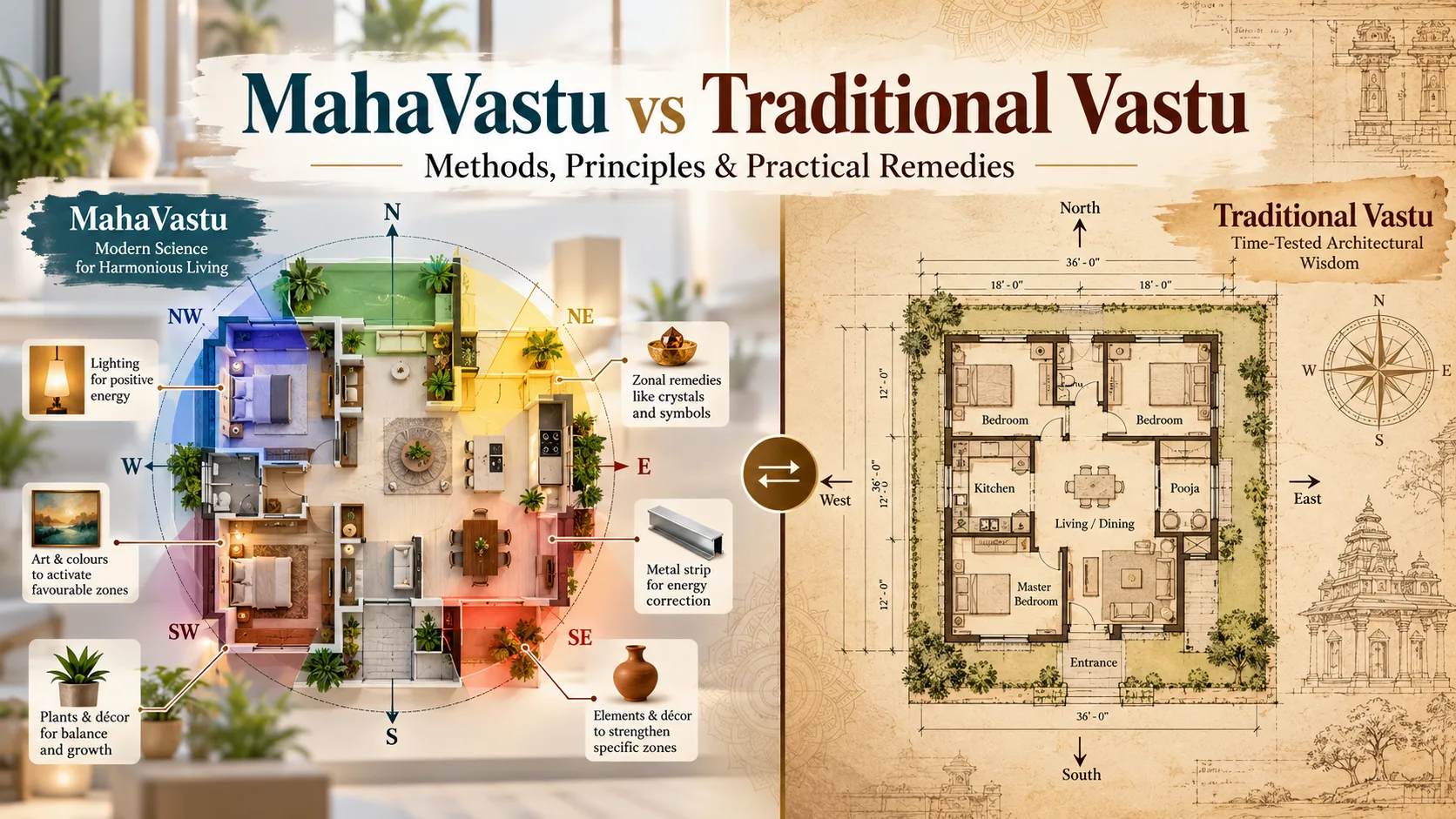
The system uses sixteen directional zones to map a property. Its official mapping instructions begin with identifying the centre, recording orientation and applying the zones to a scaled floor plan.
This gives the assessment a defined spatial framework. Rather than describing a room simply as “towards the east,” the practitioner identifies where its activities and objects sit within the mapped layout.
Direction and the Five Elements
The system's published material also discusses Panchtattva, the five elements: earth, water, fire, air and space. Practitioners interpret spatial arrangements through these concepts.
For readers, the distinction is between a measurement and its interpretation. A room's location can be mapped; the claim that its elemental balance affects a person's finances or relationships belongs to the system's belief framework. One does not automatically establish the other.
Bansal's Approach: Mapping, Activities and Corrections
Official MahaVastu training materials describe direction analysis, centre identification and zone marking on actual floor plans. The home consultation offering also outlines client discussions, site inspection, activity placement, symbolic objects and follow-up.
Taken together, these descriptions suggest an approach that considers both the physical layout and the occupants' concerns. Some offerings include horoscope-related interpretation, so clients should clarify what their consultation will involve.
A useful question is: “What information led to this recommendation?” The answer should connect the assessment to the proposed action.
What a Clear Assessment Should Explain
Before changing anything, ask the consultant to identify the area being assessed, the rule being applied and the reason for the proposed correction. Request a marked plan and written recommendations where possible.
MahaVastu Remedies and Their Practical Limits
Official publications describe coloured strips, metal strips, lighting, paintings and other objects as tools used within the method. These are presented as symbolic or elemental corrections, sometimes intended to avoid structural alterations.
That can appeal to people who cannot relocate a kitchen or bathroom. However, an easier installation does not establish effectiveness. The recommendation still needs a clear explanation, an affordable cost and realistic expectations.
Before choosing from Astrowala's Vastu products, ask why an item is recommended, whether a simpler alternative exists and whether buying through the consultant is optional. A catalogue cannot determine what suits your property.
The broader classical tradition should receive the same scrutiny. Familiar terminology and an old textual reference do not, by themselves, justify expensive building work.
Comparing Advice for Different Properties
The practical value of MahaVastu advice depends partly on the property constraints. Someone renting a flat has different options from someone designing a house.
A Rented Apartment
Imagine a tenant whose kitchen and entrance are fixed. A sensible discussion would acknowledge the tenancy agreement, available space and budget before considering changes to furniture, activities or decoration.
The tenant should ask whether proposed adjustments are reversible. They should also consider whether a new arrangement makes cooking, working or moving around the flat less convenient.
A Home Still Being Designed
For a planned house, the discussion can happen before room positions are finalised. Classical architectural guidance or a contemporary zonal assessment can be considered alongside the family's requirements.
The architect still needs to resolve access, ventilation, daylight, drainage and building regulations. Agreeing on priorities early helps prevent a late recommendation from disrupting a workable design.
Choosing Guidance Without Pressure
Before booking a MahaVastu consultation, compare the scope of the service rather than the strength of its advertising. Confirm what documents are needed, whether a visit is included and what written advice you will receive.
Discuss the complete cost, including suggested products and follow-up sessions. You can also review Astrowala's YouTube channel to assess the presenter's communication style.
Be cautious if every difficulty is attributed to the building, if urgent purchases are demanded, or if success is promised within a fixed number of days. You should have room to ask questions, seek another opinion and decline a recommendation.
Conclusion
Choosing between MahaVastu and the classical architectural tradition starts with understanding the advice you are actually being offered. Shared language about directions and balance can hide differences in assessment, interpretation and recommended changes. Ask for the reasoning behind each suggestion, and consider whether it fits your property, budget and daily routine.
For an existing apartment, reversible adjustments may be more realistic than building work. For a new home, discuss any preferred framework while the design is still flexible, with your architect involved throughout.
Keep expectations grounded. A mapped direction or symbolic correction should not be treated as a promise of better health, income or relationships. Clear explanations, transparent costs and freedom to decline matter more than dramatic claims. The most useful consultation helps you understand your options and make considered choices about a space that must work comfortably for you.
Frequently Asked Questions
Is the contemporary system separate from Vastu Shastra?
MahaVastu draws on Vastu concepts but presents them through a named contemporary framework. The broader tradition includes different texts and practices. Understanding the relationship requires looking at the actual assessment method, rather than assuming either complete separation or identical advice.
Does following Vastu always require demolition?
No. Recommendations vary with the property, practitioner and approach. Some involve planning or structural changes; others concern activities, furniture or symbolic objects. Before agreeing to work, ask why it is necessary, what alternatives exist and whether professional building approval is required.
Can tenants consider changes in their rented homes?
Yes, tenants can discuss reversible changes that respect their lease, budget and everyday needs. Moving furniture or changing decoration may be possible, but alterations to walls, wiring or plumbing require appropriate permission. Always prioritise safe access and a usable living arrangement.
Are symbolic corrections guaranteed to improve life outcomes?
No outcome should be guaranteed. A symbolic object, colour or placement recommendation does not establish that income, health or relationships will improve. Ask what evidence supports the claim, and continue addressing practical concerns through appropriate professional advice and your own decisions.
What should I prepare before a consultation?
Ask the consultant what they need before paying. Commonly relevant information includes a scaled floor plan, orientation details, photographs, current room uses and your main questions. Confirm whether personal or birth information is requested, why it is needed and how it is protected.