
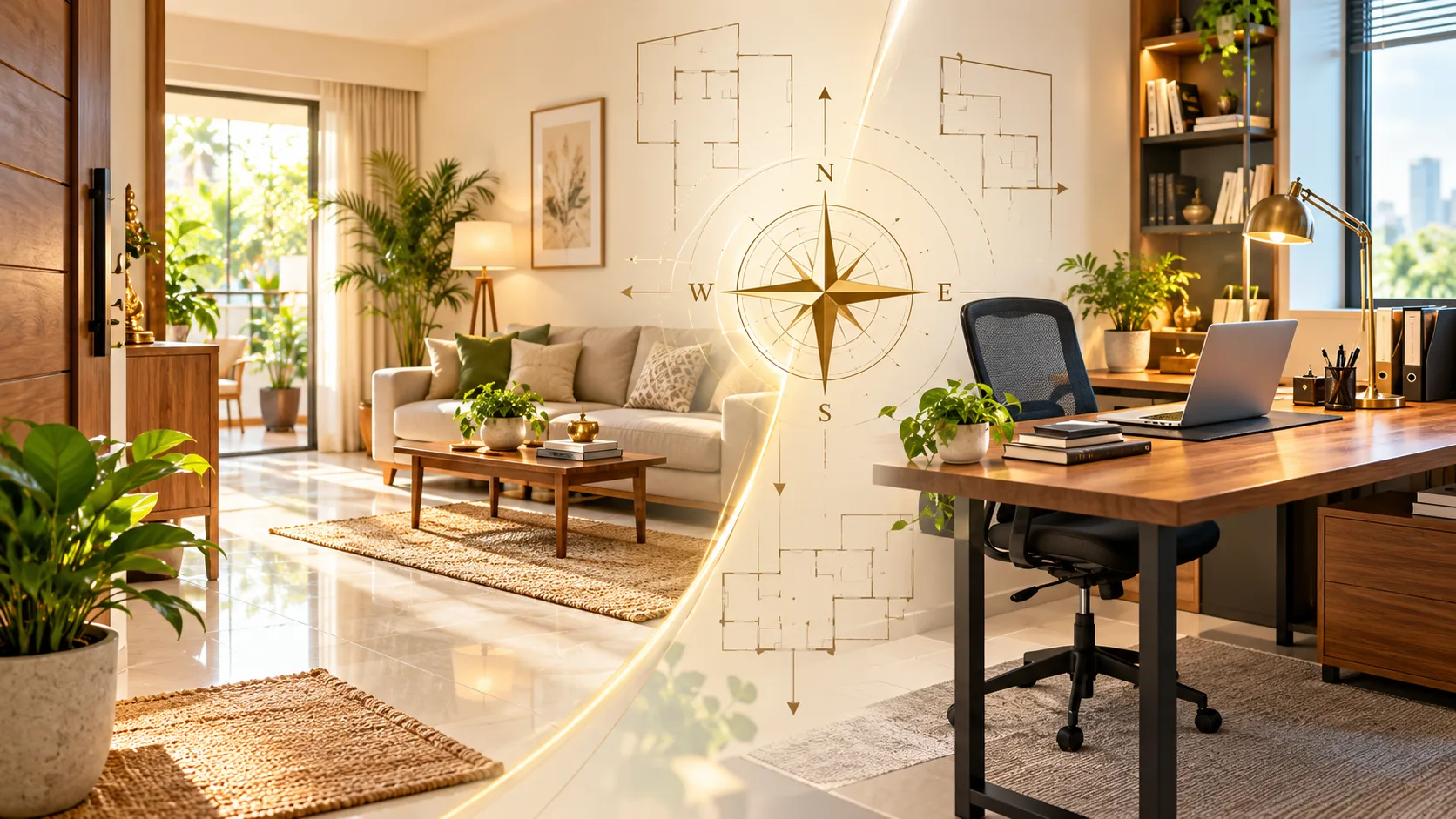
Some homes feel welcoming within seconds. Others make you hunt for keys, step around a chair, or work beside unopened mail. Vastu is a traditional Indian way of thinking about orientation, movement, and each room's purpose. For many households, it prompts a closer look at familiar surroundings.
This free vastu article keeps that idea grounded in everyday decisions. Clear a passage, test a desk position, or give a neglected corner better light without turning the house upside down. Directional customs may matter to you, but they are preferences, not promises of wealth or guaranteed success.
Begin with the house you actually have
Draw a quick floor plan before moving furniture. Mark the door, windows, beds, kitchen, bathrooms, and usual work desk. Use a compass to check north, away from a metal railing or large appliance.
Look at the plan with ordinary eyes. Does a wardrobe block a window? Does afternoon sun hit the television? Can a guest reach the bathroom without crossing the kitchen? A free vastu check helps catch these repeat annoyances.
Older schools assign activities to different directions, with details varying between consultants. Use the ideas as prompts. To study the traditional methods in more depth, explore AstroWala’s Vastu courses. Rental rules, safety, ventilation, accessibility, and your family's habits deserve the final say.
Vastu tips for home: Start with the daily routes
Make the entrance calm and usable
The doorway handles constant traffic. Keep it clear, replace a loose doormat, and give wet umbrellas somewhere to dry. If shoes collect there, a slim cabinet or two baskets may restore order.
In a rented flat, free vastu suggestions might mean changing the bulb, moving a plant from the latch, or hanging keys on one hook. The point is easy movement; an attractive entrance that causes trips has missed the mark.
Let the living room breathe
A common preference places heavier furniture towards the south or west and leaves the north or east more open. Test it only if the sofa still faces people and the balcony door stays accessible. A compass reading should not create an awkward conversation area.
Keep the centre available for movement. In a small home, one coffee table may work better than nesting tables. If children play on the floor, preserve a clear route to the door after the toys appear.
Make the bedroom a place to switch off
Some practitioners recommend sleeping with the head towards the south or east. If you try it, check that both people can get out of bed, the fan reaches the mattress, and cables are long enough. A direction that creates irritation will not make the room restful.
The evening routine matters too. Put clothes in one place, close the laptop, and soften harsh lighting. A lidded box can hide work papers when a desk shares the bedroom.
Respect the kitchen and bathroom you already have
Southeast is often named as the preferred kitchen zone, with northwest offered in some traditions. Moving a fitted kitchen means pipes, exhaust, electrical points, and a large bill. A free vastu approach should not encourage unsafe construction.
Keep counters usable, repair dripping taps, and check that the exhaust clears steam. Deal with bathroom damp before adding decoration. Good housekeeping gives these rooms a benefit you can see every day.
Vastu tips for office: Make focus easier
A north- or east-facing desk is a familiar recommendation. Try it if your screen, window, and chair cooperate. Check glare at 10 a.m. and 4 p.m.; a morning setup may leave you shielding your eyes later.
Keep frequent-use items near your dominant hand and leave room to roll the chair back. In a shared office, map routes to the printer, meeting room, and exit before shifting desks. A clear route saves more time than forced alignment.
Use free vastu thinking to give work a beginning and end. Put incoming papers in one tray, archive finished files, and clip charging cables together. At home, clearing the desk can help the living room feel like itself again.
In reception, make entry, waiting, greeting, and lift access obvious. Add a plant or artwork only when it suits the light and cleaning routine. Decoration should support the room, not narrow the walkway.
If you prefer listening to a discussion, you can also explore AstroWala on YouTube for more on Vastu and related traditions.
Vastu remedies that leave the walls alone
Fix the visible problem first
If a corner is gloomy, improve the lighting. If a door sticks, adjust the hinges. If shelves spill over, sort what is used. These ordinary actions often solve discomfort labelled a directional defect.
A good free vastu remedy is reversible. Move a chair, rotate the desk, or clear a shelf, then live with it for a week. Note what improved before buying an object for a problem layout could solve.
Treat symbolic objects as personal choices
Mirrors, crystals, pyramids, salt bowls, and plants appear in modern recommendations. You may enjoy the look or ritual. If you’re curious about the objects themselves, browse AstroWala’s Vastu products and choose only what you understand and want to use. Be wary of claims that an object can cure illness, erase debt, or guarantee a promotion.
A mirror can brighten a dark hall or help you check your appearance. It is less useful when it reflects a harsh lamp into someone's eyes. Consider the actual effect before placing it.
Ask sensible questions before paying for work
A consultant should explain the proposal, cost, and whether it is optional. If you want to explore professional guidance, start with AstroWala and review its Vastu services before making an enquiry. Get a second opinion before altering a wall, moving a drain, or replacing electrics. Follow permissions and hire a qualified professional for technical work.
Advice should leave you capable of improving your home, not frightened of it. If every feature becomes a crisis, step back. You can respect a tradition while declining a remedy that does not fit your budget or lease.
Conclusion
A home does not become comfortable because every object sits in a perfect sector. It becomes comfortable when people can enter without stumbling, cook without fighting for counter space, sleep without a glowing screen, and work without moving a chair constantly. Traditional direction rules can start a useful conversation when they reveal patterns you have ignored.
Use free vastu advice as a nudge towards changes. Clear one route, try a desk angle, repair a leak, or move a cabinet away from the window. Make one adjustment, give it a fair trial, and keep what helps. You do not need expensive objects or a complete renovation to create a calmer setting. Comfort, safety, budget, and the habits of the people who use the space should guide every decision. The best result is a room that feels easier to inhabit tomorrow than it did today.
Frequently asked questions
1. Can I use this in a rental?
Yes. Start with movable furniture, storage, lighting, and clear access. This free vastu method works well in rented homes because it avoids walls and plumbing. Ask the landlord before fitting shelves, changing hardware, or making any permanent alteration to the property.
2. What if I dislike my entrance direction?
A doorway's direction does not prove that a home will bring bad luck. Keep the threshold bright, dry, and easy to cross. If you follow traditional guidance, look at the whole plan and your daily experience before judging one feature.
3. Do I need special objects?
No. Such objects are optional symbols, and claims about guaranteed results deserve careful questions. Begin with repairs, decluttering, and furniture placement. Buy something only if you enjoy it, understand its upkeep, and would still want it without a promise of magical results.
4. Which way should my desk face?
North and east are common traditional choices, but comfort comes first. Test the desk with your actual monitor, chair, and window light. In a shared office, protect walkways and colleagues' access. A workable position is better than an orientation that causes glare or strain.
5. How do I know it helped?
Choose one clear outcome, such as opening a cupboard without moving a chair or seeing less reflection on the screen. Change one thing, observe it for several days, and keep it only if the room feels easier to use.