
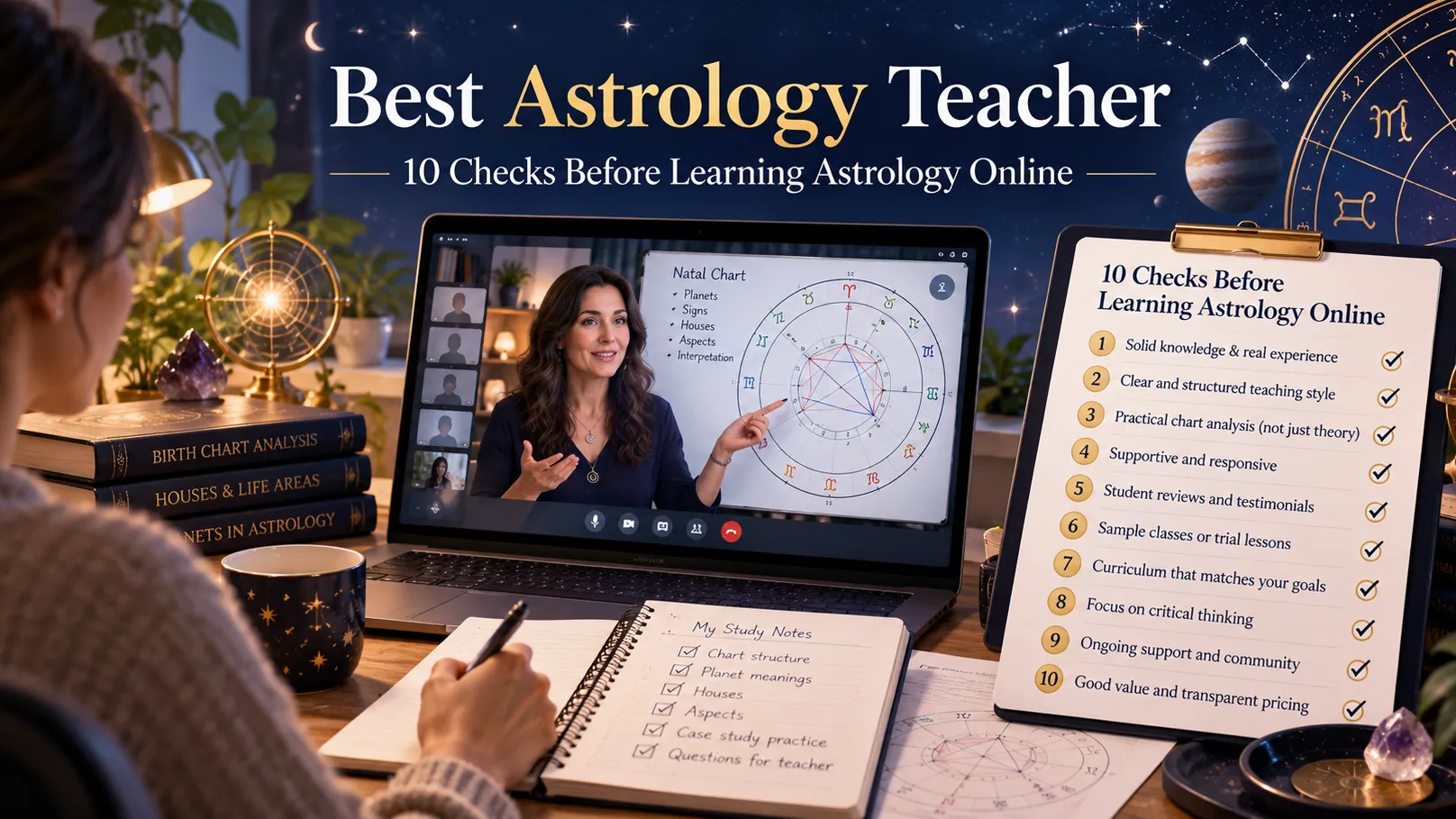
An impressive prediction or a popular social account can make you want to study with a particular teacher. Neither tells you whether you'll understand their explanation of a birth chart. Before choosing the best astrology teacher, look at what happens during an ordinary lesson and after you attempt the homework. You're paying for instruction in a traditional interpretive practice, not certainty about future events.
10 checks before you pay
1. Find out what the teacher has studied
A biography needs enough detail to investigate. Look for the subjects studied, the teaching tradition, and the issuer of any claimed qualification. Verify certificates where possible. A Vedic astrology teacher should also explain which texts or methods the course draws on. Being described as the best astrology teacher doesn't settle these questions. If the background is vague, request details before deciding.
2. Watch how an interpretation is explained
Review public videos, then request a complete sample lesson with the chart visible. In a hypothetical career reading, notice whether the teacher identifies several relevant factors or jumps straight to a conclusion. Houses are chart divisions associated with areas of life; a beginner needs that explained before being expected to interpret them.
After watching, write down the steps you could repeat yourself. If you remember the prediction but can't reconstruct the reasoning, ask for clarification. Your idea of the best astrology teacher may change after this exercise. You need explanations you can follow.
3. Read beyond the list of topics
Astrowala lists planets, houses, signs, and birth-chart basics in its Foundation of Vedic Astrology course. Its advanced course includes dashas, traditional planetary periods, and transits. To compare those options, you'll still need the lesson order and entry requirements.
When you learn astrology online, a long syllabus can look reassuring. What matters is whether one lesson prepares you for the next. An early exercise should draw on concepts already taught. If it doesn't, ask about preparatory lessons.
4. Count the exercises you'll attempt yourself
Watching someone read a chart can feel easier than doing it. Get a representative assignment before enrolling, along with an example of the explanation expected from students.
A useful hypothetical task might require you to identify factors supporting a career interpretation, then explain which factors complicate it. Compare the number of independent submissions with demonstrations. Also establish whether practice charts are shared with permission and identifying details removed.
5. Look closely at a corrected assignment
An astrology mentor is most useful when you can see what to change in your own work. Request an anonymised example of student feedback. Suppose a reading rests on one planetary placement. A helpful correction identifies another factor the student missed and explains why it changes the interpretation.
The best astrology teacher helps you recognise the mistake, then practise a better approach. Find out who marks assignments and whether revisions receive feedback too. If comments arrive only through group discussion, ask how students know their particular errors have been addressed.
6. Pin down what support includes
Astrowala's general course overview describes assignments and live Q&A. Confirm whether they're included in the course and batch you want.
Then work through an ordinary situation: you've finished a recording and don't understand one step. Where would you send the question? Who would answer, and roughly when? Establish whether support continues after lessons finish. In student groups, establish whether an instructor checks the answers shared.
7. Check whether the arrangements fit your week
An astrology teacher online may have a suitable course at an unsuitable time. Get the language, time zone, class length, and attendance requirements before judging the timetable.
The best astrology teacher for you must also fit the way you can study. If work means missing live sessions, recording access becomes essential. Confirm which sessions are recorded, when access expires, and whether playback works on your device. Get these details in writing.
8. Notice how difficult subjects are handled
An instructor should explain uncertainty without using fear to sell a remedy or another course. Guaranteed predictions, disaster warnings, and pressure to pay immediately deserve caution. Ask how sensitive practice readings are discussed and how chart owners' privacy is protected. Course guidance should never replace qualified medical, legal, or financial advice.
9. Read reviews for classroom details
If reviews are your main evidence for choosing the best astrology teacher, read past praise for impressive consultations. Look for the course taken, approximate study date, and details about explanations, corrections, or support. Compare recurring observations across independent sources where available. Testimonials promising quick expertise or assured earnings need caution. Without specific accounts of learning, treat teaching quality as something you still need to investigate.
10. Ask for the complete price and terms
Compare tuition, taxes, books, software, assessments, certificates, guidance, and optional products or reports. Identify compulsory extras, including later payments for recordings or support.
Read refund deadlines and exclusions before paying. Check instalment obligations and what happens if a batch is postponed or cancelled. Save the written offer. If the provider won't explain a charge or access condition, delay enrolment until you have an answer. A payment deadline doesn't resolve missing information.
Conclusion
The best astrology teacher for you is someone whose lessons you can follow and whose corrections help you move forward. A popular account may introduce you to that person, but the decision needs more evidence. Watch a lesson, inspect the work students do, and find out what happens when an interpretation needs correcting.
For Astrowala or any other provider, keep the course you're considering at the centre of the comparison. General descriptions won't settle your questions about prerequisites, recordings, support, or costs. Put the answers beside your available study time and budget. An appealing course can still be the wrong fit if those arrangements don't work for you.
Choose two options worth investigating. Request their lesson outline, a sample class, and written fee and access terms. Review those together before paying, with any unanswered questions clearly marked for follow-up with the provider.
Frequently asked questions
Do I need any knowledge before joining?
Not for a course that genuinely starts with the basics. Check whether chart symbols, planets, signs, and houses are explained before interpretation. If the instructor assumes those foundations, ask about preparatory teaching. Choose the starting level you need, even if another course sounds more impressive.
How can I judge teaching before enrolling?
Watch a complete sample and try explaining its method without replaying it. Then examine an assignment and its feedback. The best astrology teacher for you makes both understandable. If either remains unclear, ask for another example before committing to the course.
Should I choose live classes or recordings?
Choose the format you can use consistently. Live sessions allow questions during teaching, while recordings let you revisit difficult explanations. Neither arrangement guarantees support outside lessons. Confirm how questions are answered and whether recordings remain available long enough for your study routine.
How long will learning take?
There isn't one timeline for everyone. Ask what you should be able to do at each course stage and how much weekly practice is expected. Progress depends on study, feedback, and the material covered. Completing lessons and interpreting unfamiliar charts independently are different milestones.
Does a certificate show that I am competent?
It depends on what the certificate requires. Attendance, a short quiz, and assessed chart readings demonstrate different things. Ask how practical work is judged and whether corrections are required. A certificate can record completion; it can't replace evidence that you understand and apply the teaching.